


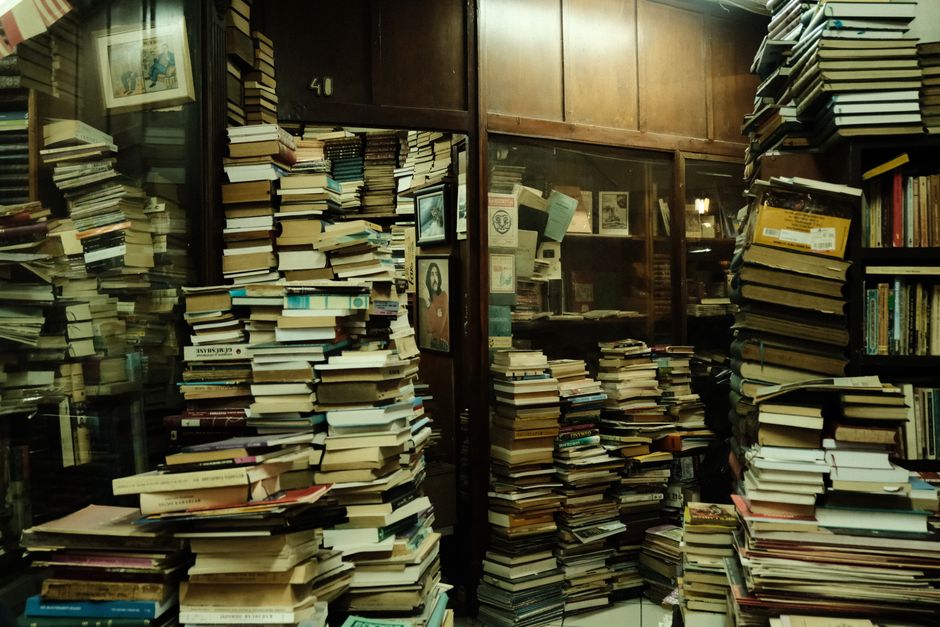
Bookshops have always made good homes for ghosts, at least in the imagination. Old pages carry old voices, and a quiet aisle can feel like a corridor between one life and another. In the UK that feeling has a name, painted above more than one shop door: The Haunted Bookshop.
The trail of haunted bookshops leads in two very different directions on the map. The first stop is Bristol, where a female-owned witchy bookshop and venue sits in Stokes Croft. The second is Cambridge, where a children’s and illustrated book specialist has occupied a shop called The Haunted Bookshop since 1993. A third stop exists only on paper, inside a mystery novel that carried the name to readers in 1919. Together they show that haunted bookshops do not all look alike. They can be gothic, comic, cosy or uncanny, sometimes all at once.
The Haunted Bookshop, Bristol: occult shelves in Stokes Croft
The Haunted Bookshop in Bristol describes itself as a female-owned indie bookshop and venue specialising in witchcraft, occult, folklore, fantasy and horror books. Its stock is full of eerie, unusual and spooky titles, alongside gifts for readers who like their shelves dark. According to its own pages, it is Bristol’s only witchy or alternative bookshop, and it acts as a queer-friendly, creative community hub in the heart of Stokes Croft.
The shop opened in Bristol two years before a BBC report published in August 2026, and it was created for anyone who has ever felt a little different. It offers Tarot and Tea Leaf readings as part of its venue side. That same BBC report noted that the shop is fighting to stay open amid rising costs, and a CrowdFunder page asks supporters to help keep the doors open during a difficult time. Small businesses need support, the shop says, and its mailing list offers one way to stay connected.
For readers of horror, fantasy and the occult, this is one of the most welcoming haunted bookshops in the UK because it was designed as a gathering place rather than just a retail space.


The Haunted Bookshop, Cambridge: children’s classics in a quiet passage
Cambridge offers a different kind of haunting. Sarah Key Books has specialised in children’s and illustrated books since 1987, and it has occupied a shop known as The Haunted Bookshop since 1993. The shop sits in a quiet passage in the heart of the city, in the shadow of the ancient church of St Edward King and Martyr, and only seconds from King’s College Chapel and the Market Square.
The stock here is centred on children’s literature and illustrated treasures, so the atmosphere is cosier than the name suggests. The idea that a family friendly bookshop can share its name with occult venues and gothic novels says a lot about the character of haunted bookshops. They come in many moods. This one also buys books, and it lists stock through ABE Books and the PBFA, which makes it a useful stop for collectors searching for a particular picture book or edition.


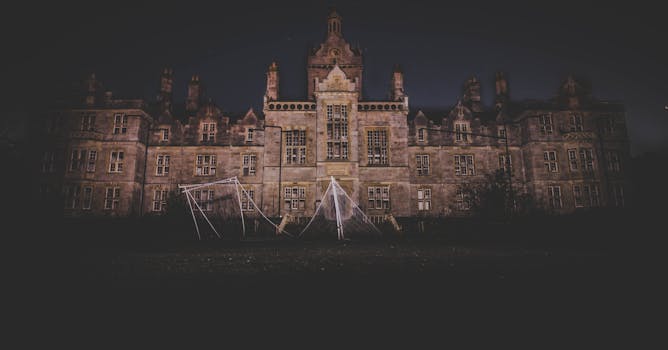
The 1919 novel that gave the name its mystery
The link between bookselling and ghosts goes back further than any modern shop front. In 1919 Christopher Morley published The Haunted Bookshop, a mystery story set among second-hand books and the people who trade in them. The novel is the second title in Morley’s Parnassus sequence, and in it the owner of a shop called Parnassus at Home, Roger Mifflin, describes his business as a haunted bookshop.
Morley treats the haunting as part of the shop’s charm, so readers are never quite sure whether the ghosts are real or simply the product of too many stories in one place. The title helped plant the idea that a bookshop can be haunted by its own stock, and that idea still shapes how readers imagine haunted bookshops today.
In a sense, every second-hand shop is a little haunted. Previous owners leave traces in the margins and on the covers, and the real ghost is usually a story waiting to be found. That is the charm Morley understood, and it is the same charm that draws people to the real shops that carry his title.

What to expect when you visit a haunted bookshop
Visiting haunted bookshops in the UK is rarely a scary experience. The Bristol shop welcomes browsers with a diverse mix of horror, fantasy, mystery, occult and folklore titles, plus gifts with a spooky edge. The Cambridge shop greets visitors with children’s classics in a calm, historic setting. Neither relies on theatrical darkness or sudden frights.
Independent shops change their plans, so check opening times and event details before travelling. For the Bristol venue, ask about Tarot and Tea Leaf readings while you are there. For Cambridge, it is worth allowing time to explore the passage, the ancient church beside it and the short walk to King’s College Chapel.
How to keep haunted bookshops on the high street
The Bristol shop has been open only a short time, and its CrowdFunder campaign shows how fragile a new independent can be. Shoppers can join its mailing list, visit its page on uk.bookshop.org or call in at Stokes Croft to browse in person. The Visit Stokes Croft listing also helps visitors find the shop when exploring the area.
In Cambridge, the tradition runs the other way. Sarah Key Books has been buying and selling since 1987, so the simplest support is to browse its catalogues on ABE Books or the PBFA, or to offer it the books it is always interested in buying. Every visit, in person or online, is a small vote for the kind of high street that still makes room for small shops with strange names, and for a book culture that keeps haunted bookshops alive.
For anyone who likes their reading with a shiver, these three haunted bookshops are worth tracking down: one in Bristol for occult and horror fans, one in Cambridge for collectors of children’s illustration, and one from 1919 for anyone who wants to know where the fascination began. Bookshops may not be genuinely haunted, but they hold ghosts of every kind between their covers. That is exactly why haunted bookshops remain such a popular destination for readers who believe a good story should stay with you long after you leave the shop.
Frequently Asked Questions
Here are the questions readers ask most often about the UK’s haunted bookshops.
Is The Haunted Bookshop in Bristol a real shop?
The Haunted Bookshop is a real, female-owned indie bookshop and venue in Stokes Croft, Bristol. It specialises in horror, fantasy, mystery, occult and folklore books and gifts, and it is known as Bristol’s only witchy or alternative bookshop. It also hosts Tarot and Tea Leaf readings. BBC reporting from August 2026 noted that the shop opened in Bristol two years earlier and was working to stay open amid rising costs.
Why is there a bookshop called The Haunted Bookshop in Cambridge?
Sarah Key Books is a children’s and illustrated book specialist that has occupied a Cambridge shop known as The Haunted Bookshop since 1993. It sits in a quiet passage in the heart of the city, close to the church of St Edward King and Martyr, King’s College Chapel and the Market Square. The business has specialised in children’s and illustrated books since 1987.
Is The Haunted Bookshop a true ghost story?
The name has two lives. It belongs to real independent shops, including the witchy Bristol bookshop and the Cambridge children’s bookshop, but it is also the title of a 1919 mystery novel by Christopher Morley. In the novel, bookshop owner Roger Mifflin calls his second-hand shop The Haunted Bookshop. The mystery unfolds among books rather than in a traditional haunted house.
What kind of books do haunted bookshops in the UK sell?
There is no single answer. The Haunted Bookshop in Bristol specialises in horror, fantasy, mystery, occult and folklore titles, with gifts for readers who enjoy eerie themes. Sarah Key Books in Cambridge specialises in children’s and illustrated books. Anyone looking for the middle ground can start with Christopher Morley’s 1919 novel, which is a mystery about books themselves.