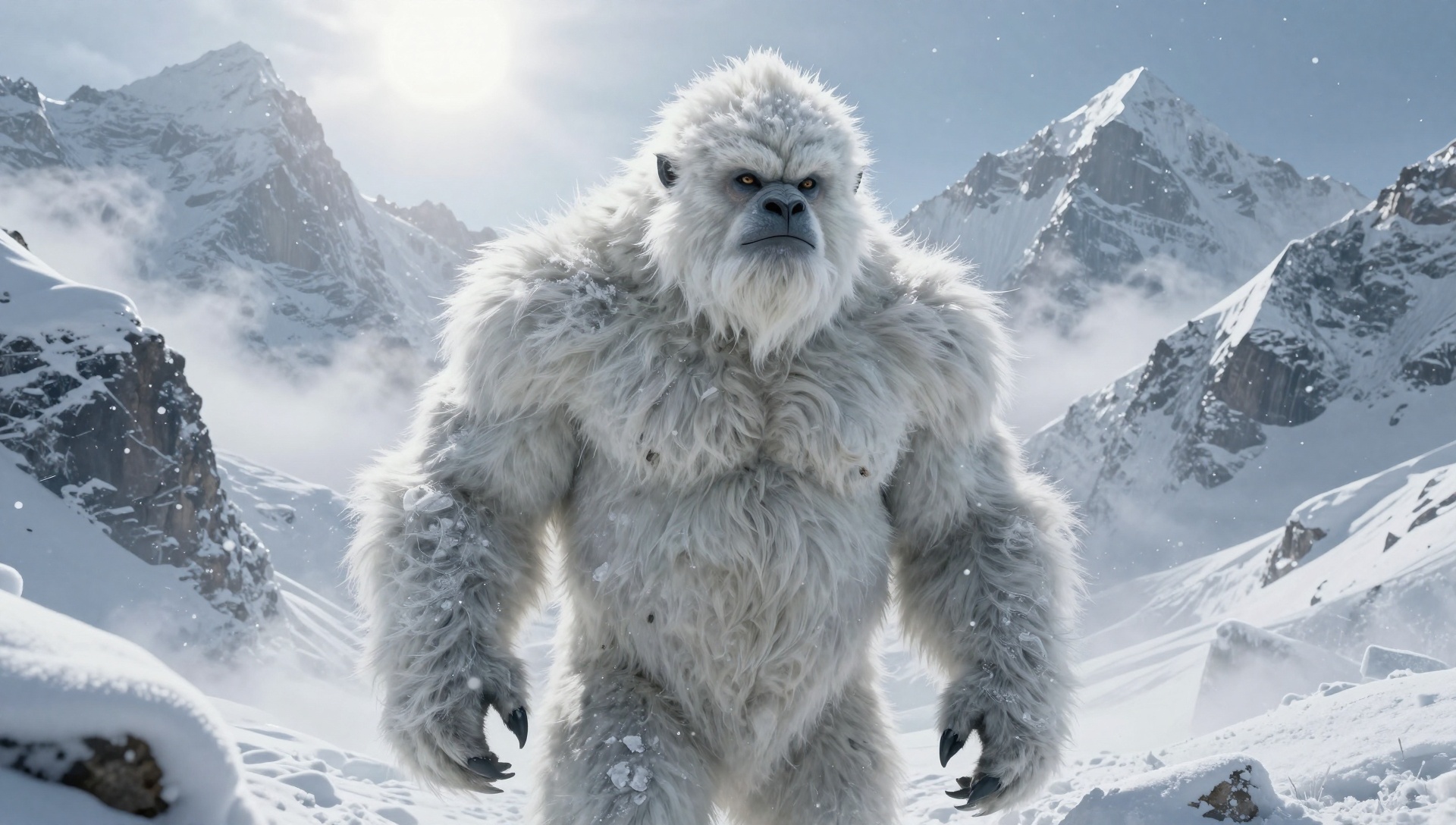
High among the frozen peaks of the Himalayas, stories have circulated for generations about a mysterious creature wandering through remote valleys and snow-covered mountains. Known throughout much of the Western world as the Abominable Snowman, this legendary being is more commonly associated with the name Yeti and has become one of the world’s most famous unexplained creatures.
Descriptions usually portray a large, powerful, hair-covered animal capable of walking upright through terrain that would challenge even experienced mountaineers. Footprints, eyewitness accounts and alleged physical remains have all contributed to the mystery. Many accounts of abominable snowman describe the same unsettling pattern: sleep, pressure, fear, and the feeling of a presence close by.
But is there an unknown creature hiding in the Himalayas, or did folklore, misidentification and sensational reporting create a monster that never existed?
Origins of the Abominable Snowman Legend
Stories of mysterious beings inhabiting the Himalayan wilderness existed long before Western explorers arrived in the region. Local traditions include accounts of wild, human-like creatures living beyond settlements and in remote mountainous environments. In older demonology, abominable snowman was not just a frightening story but a way to explain experiences people found disturbing and difficult to discuss.
The Western fascination with these stories increased dramatically during the nineteenth and early twentieth centuries as explorers and mountaineers travelled deeper into the Himalayas.
One important episode occurred in 1921 during a British reconnaissance expedition to Mount Everest. Members of the expedition discovered unusual tracks at high altitude. Journalist Henry Newman subsequently reported the story and translated a Tibetan expression associated with the tracks as “Abominable Snowman.”
The memorable name captured the public imagination.
Newspapers, adventurers and eventually filmmakers helped transform a regional tradition into an international mystery.
What Does the Yeti Look Like?
Descriptions vary considerably between alleged encounters.
Witnesses have sometimes described a large, muscular creature covered with reddish-brown, dark or occasionally pale hair. It is often portrayed walking on two legs, although some reports suggest behaviour more consistent with known Himalayan animals.
Its supposed footprints are equally controversial.
Some tracks attributed to the creature appear unusually large and vaguely human in shape. However, tracks in snow can change dramatically after they are made. Melting, freezing, wind and sunlight can enlarge and distort an ordinary animal footprint until its original shape becomes difficult to identify.
This natural process provides one possible explanation for some of the enormous footprints photographed by Himalayan expeditions.
Nevertheless, certain tracks have remained difficult to explain conclusively, helping the mystery survive.
The Famous 1951 Footprints
Perhaps the most celebrated evidence associated with the Abominable Snowman appeared during Eric Shipton’s 1951 Mount Everest reconnaissance expedition.
Shipton and his companions discovered a trail of unusual footprints in the snow and photographed them. One particularly famous photograph showed a footprint beside an ice axe for scale.
The image became iconic. For related reading, see Abominable Snowman: The Mysterious Creature of the Himalayas.
To supporters of the Yeti hypothesis, the photograph appeared to provide physical evidence that a large unidentified creature was wandering through the Himalayas. Sceptics proposed less extraordinary explanations, including distorted tracks belonging to known animals.
The photograph remains one of the defining images of the mystery and helped trigger a surge of international interest during the 1950s.
Expeditions Searching for the Creature
As fascination increased, organised expeditions travelled to the Himalayas specifically looking for evidence.
One of the most famous was the Daily Mail Snowman Expedition of 1954. Researchers collected stories, examined tracks and investigated alleged physical evidence associated with the creature.
The legendary mountaineer Sir Edmund Hillary later became involved in the mystery. During a Himalayan expedition in 1960–61, Hillary and his companions investigated supposed Yeti evidence, including a scalp preserved at a monastery.
Scientific examination did not provide convincing evidence that the scalp came from an unknown primate.
Despite repeated expeditions, no authenticated body, skeleton or living specimen has ever been produced.
That absence of definitive physical evidence remains one of the strongest objections to claims that an undiscovered giant primate inhabits the Himalayas. For broader authority context, visit Library of Congress.
Could Himalayan Bears Explain the Mystery?
One of the leading scientific explanations involves bears.
Several bear populations inhabit regions associated with Yeti traditions. Under certain circumstances, bears can stand or walk briefly on their hind legs. Their tracks can also overlap or become distorted in snow, potentially producing footprints that appear surprisingly human.
Modern genetic investigations of alleged Yeti remains have strengthened the connection.
Hair, bone, skin and other biological samples claimed to come from mysterious Himalayan creatures have undergone DNA testing. Multiple specimens have ultimately been identified as belonging to known animals, particularly bears.
This does not explain every eyewitness story individually. However, it demonstrates that at least some physical objects presented as Yeti evidence originated from ordinary Himalayan wildlife.
Folklore Versus Cryptozoology
Understanding the legend requires separating traditional Himalayan beliefs from the Western idea of a hidden zoological species.
Folklore does not necessarily describe supernatural or mysterious beings as though they were animals awaiting scientific classification. Stories can carry religious, spiritual and cultural meanings that disappear when outsiders attempt to interpret them purely as evidence for an undiscovered primate.
Cryptozoology takes a different approach. For related reading, see Abominable Snowman: The Mysterious Creature of the Himalayas books.
Cryptozoologists investigate creatures whose existence has not been scientifically confirmed, often searching for eyewitness testimony, photographs, footprints or biological material.
From this perspective, the Abominable Snowman belongs to the same broad category of mystery animals as Bigfoot in North America and other alleged wild humanoids reported around the world.
Mainstream zoology, however, requires verifiable physical evidence before recognising a new species.
Could an Unknown Primate Survive There?
The Himalayas contain enormous areas of difficult terrain, making the possibility of undiscovered wildlife tempting.
Yet a breeding population of large primates would presumably leave substantial evidence. Researchers might expect bones, droppings, hair, feeding remains, clear photographs or genetic material.
Modern technology creates additional challenges for the mystery. Camera traps, improved communications, satellite mapping and genetic analysis have made remote wildlife easier to document than it was during the early twentieth century.
Despite these advances, convincing zoological evidence for an unknown giant Himalayan primate has not emerged.
That does not make the stories meaningless. Instead, it shifts attention towards the complicated relationship between wildlife, landscape, human perception and folklore.
Why the Abominable Snowman Still Fascinates Us
The enduring appeal of the Abominable Snowman comes partly from its extraordinary environment.
The Himalayas provide an almost perfect setting for a mystery. Towering mountains disappear into cloud, violent weather can isolate entire regions, and remote valleys remain difficult to explore. Against this landscape, the possibility of something unknown feels strangely believable.
The legend also touches upon a deeper fascination with undiscovered creatures.
Human beings have explored much of the planet, yet we remain captivated by the possibility that something extraordinary might still exist beyond the boundaries of established knowledge.
For believers, mysterious footprints and eyewitness accounts suggest that the case remains open. For sceptics, bears, altered tracks, folklore and misidentification provide more convincing explanations.
No scientifically verified specimen has yet settled the argument. For broader authority context, visit Encyclopaedia Britannica overview of ghosts.
Until such evidence appears, the creature will remain suspended between folklore and cryptozoology—a mysterious figure walking endlessly through the snows of the Himalayas.