


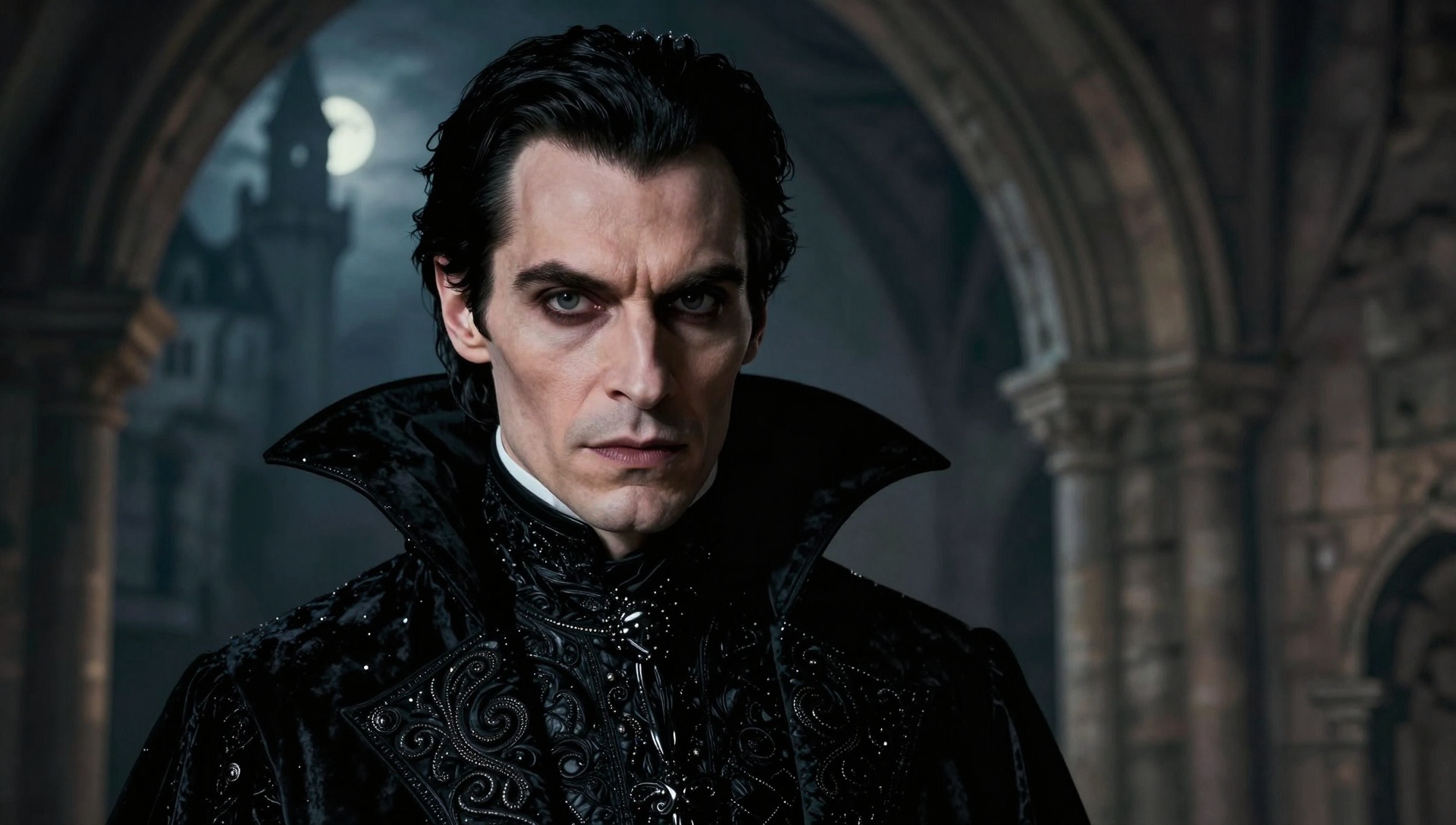
Few names in supernatural literature inspire an immediate sense of darkness and dread quite like Dracula. The mysterious Transylvanian count, immortalised in Bram Stoker’s 1897 Gothic novel, has become the definitive image of the vampire: an aristocratic creature who emerges after sunset, drinks human blood and retreats from daylight into a world of crypts, castles and shadows.
Yet the story is more complicated than a single fictional monster. Behind Stoker’s creation lie centuries of European vampire folklore, historical accounts of the brutal Wallachian ruler Vlad III and Victorian fears surrounding death, disease and the supernatural.
More than a century after the novel appeared, the Prince of Darkness remains one of horror’s most recognisable figures.
Dracula and Bram Stoker’s Gothic Masterpiece
Irish author Bram Stoker published Dracula in 1897. Rather than presenting the story through a conventional narrator, Stoker constructed much of the novel from diaries, letters, newspaper reports, telegrams and other documents.
The story begins with English solicitor Jonathan Harker travelling to the remote Transylvanian castle of Count Dracula. Harker gradually realises that his mysterious host is no ordinary nobleman.
The Count sleeps in boxes containing earth, possesses extraordinary strength and displays supernatural abilities. Most disturbingly, he survives by feeding upon the blood of the living.
After leaving Transylvania, the vampire travels to England aboard the doomed ship Demeter. His arrival brings the ancient supernatural threat into the supposedly modern world of Victorian Britain.
Professor Abraham Van Helsing and a small group of companions eventually recognise what they are confronting and begin their desperate attempt to destroy the vampire.
Was Dracula Based on Vlad the Impaler?
The historical figure most frequently associated with Count Dracula is Vlad III of Wallachia, commonly known as Vlad the Impaler.
Born during the fifteenth century, Vlad became notorious for his brutal methods of punishment, particularly impalement. His reputation spread through hostile accounts that portrayed him as exceptionally cruel.
Vlad’s father, Vlad II, was associated with the Order of the Dragon and became known as Vlad Dracul. The younger Vlad was consequently called Dracula, a name generally understood in this historical context as meaning “son of Dracul” or “son of the Dragon.”
Stoker encountered the name while researching his novel and apparently found it suitably dramatic.
Popular culture frequently presents Vlad as the direct inspiration for Stoker’s vampire, but the historical connection should not be exaggerated. Evidence that Stoker possessed detailed knowledge of Vlad’s life is limited.
The historical prince and fictional vampire have nevertheless become almost inseparable in modern imagination.
The Ancient Fear of Vampires
Stoker did not invent the vampire.
Stories of the dead returning to harm the living existed across Europe for centuries. Particularly influential traditions developed in Eastern and Central Europe, where communities sometimes blamed unexplained deaths, disease or misfortune on suspected revenants.
The characteristics attributed to these beings differed between regions. They were not always elegant aristocrats wearing black capes. For related reading, see Dracula — The Prince of Darkness: History, Legend and the Vampire Myth.
Folkloric vampires could instead be imagined as disturbing corpses physically returning from their graves. Communities sometimes opened graves and performed rituals intended to prevent suspected individuals from rising again.
Bodies might be staked, burned, decapitated or otherwise treated according to local customs.
Such practices reflected genuine fear of supernatural attack.
Blood and the Supernatural
Blood has powerful symbolic significance across cultures. It represents life, death, family, sacrifice and physical vitality.
The idea of a supernatural creature stealing blood therefore carries an obvious horror: the vampire does not simply kill its victim but consumes the substance traditionally associated with life itself.
The vampire’s bite also creates an intimate relationship between predator and victim.
In later fiction, this became connected with themes of temptation, seduction and forbidden desire. Stoker’s novel contains numerous scenes in which blood and sexuality overlap symbolically, contributing to generations of literary interpretation.
This combination of death and attraction helped distinguish the vampire from many other supernatural monsters. For broader authority context, visit Library of Congress.
The Powers of the Prince of Darkness
The fictional Count possesses an impressive range of supernatural abilities.
He has extraordinary physical strength and can influence or control certain animals. He can transform himself, manipulate weather and move in ways impossible for an ordinary human being.
However, his powers are accompanied by restrictions.
Stoker’s vampire is associated with sacred objects, consecrated materials and particular rules governing his movements. Contrary to many modern versions of vampire mythology, sunlight in the original novel does not instantly cause him to burst into flames.
Many characteristics now considered essential vampire lore were developed or popularised through later adaptations.
This demonstrates the enormous influence of theatre and cinema on our modern understanding of the character.
Dracula Enters the Cinema
The twentieth century transformed Dracula from a literary villain into a global cultural icon.
Early film adaptations helped establish the visual language that audiences still associate with vampires. The 1931 Universal film starring Bela Lugosi was particularly influential.
Lugosi’s elegant clothing, distinctive accent and hypnotic manner helped establish the image of the sophisticated aristocratic vampire. For related reading, see Dracula — The Prince of Darkness: History, Legend and the Vampire Myth books.
Christopher Lee later brought a more physically threatening and blood-soaked interpretation to Hammer Film Productions, beginning with Horror of Dracula in 1958.
Countless adaptations followed.
Each generation reinvented the character, sometimes portraying him as a terrifying monster and sometimes as a tragic, romantic or even sympathetic immortal.
Transylvania and the Castle in the Mountains
Transylvania has become permanently associated with vampire mythology, largely because of Stoker’s novel and its adaptations.
The real region lies in modern Romania and contains medieval towns, forests, fortresses and dramatic mountain landscapes. These surroundings have made it an irresistible destination for travellers interested in Gothic history and vampire legends.
Bran Castle is frequently marketed through its association with the famous Count, although the relationship between the historical fortress, Vlad the Impaler and Stoker’s fictional castle is far more complicated than popular tourism sometimes suggests.
Nevertheless, the image of a ruined castle towering above mist-covered mountains has become inseparable from vampire mythology.
Why Dracula Remains Immortal
The extraordinary longevity of Dracula comes from his ability to change while remaining instantly recognisable.
He can represent fear of death, disease, sexuality, outsiders, aristocratic power or even immortality itself. Filmmakers and writers continually reinterpret those themes for new generations.
The vampire has consequently survived cultural changes that caused many other Victorian monsters to fade from popular consciousness.
More importantly, the central idea remains frighteningly simple.
Something that appears human enters our world after darkness falls. It possesses intelligence, charm and supernatural power, but behind that civilised appearance is a predator that regards human beings as prey.
That contrast between sophistication and monstrosity is what makes the Count so effective.
Bram Stoker created a character who escaped the boundaries of his own novel and became part of modern mythology. The historical Vlad belonged to the fifteenth century and Stoker’s vampire to the nineteenth, but the Prince of Darkness continues to haunt books, films and nightmares today.
Perhaps that is the greatest supernatural power ever attributed to him. For broader authority context, visit Encyclopaedia Britannica overview of ghosts.
He refuses to stay dead.