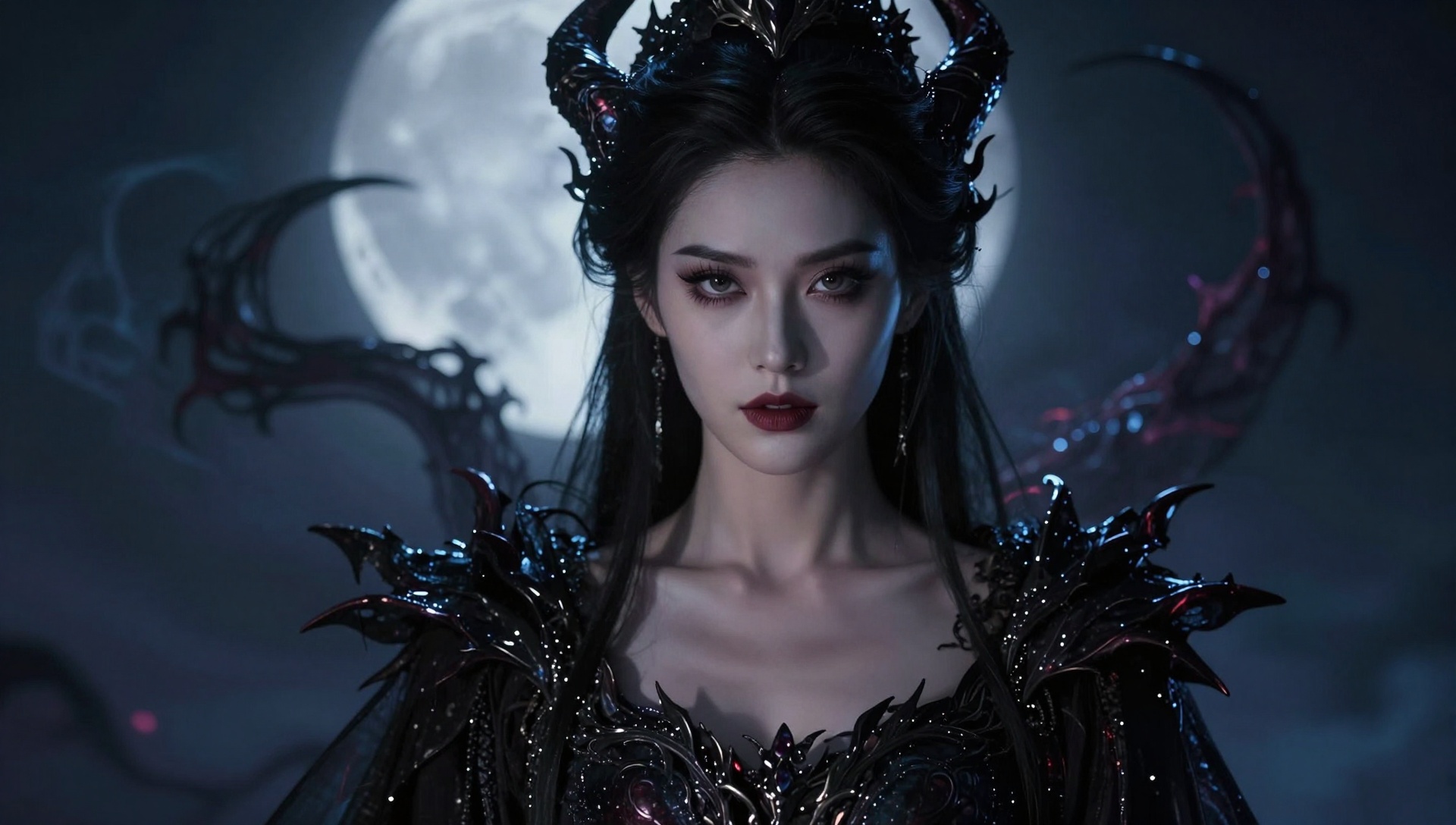
Throughout the history of mythology and demonology, few supernatural figures have inspired as much fascination, fear and controversy as Lilith. Described at different times as a night demon, seductress, rebellious spirit and mother of demons, she occupies a shadowy territory between ancient religion, folklore and later occult tradition.
Her story did not emerge fully formed from a single ancient text. Instead, it developed over centuries as different cultures and writers added new characteristics to an increasingly sinister supernatural figure. From possible connections with Mesopotamian spirits to medieval Jewish folklore and modern occultism, her transformation provides a fascinating example of how legends evolve. Many accounts of lilith: the demonic queen describe the same unsettling pattern: sleep, pressure, fear, and the feeling of a presence close by.
For readers interested in demonology, forbidden folklore and paranormal history, hers is one of the darkest stories to survive from the ancient world.
Ancient Origins of the Legend
The origins of the legend are complicated and frequently debated. Scholars have connected the later figure with ancient Mesopotamian traditions concerning dangerous spirits associated with the wilderness, illness, sexuality and the night. In older demonology, lilith: the demonic queen was not just a frightening story but a way to explain experiences people found disturbing and difficult to discuss.
Ancient Akkadian texts contain references to supernatural beings known as lilû, lilītu and ardat-lilî. These entities should not automatically be treated as identical to the later demoness, but they demonstrate that similar supernatural concepts existed in Mesopotamia long before medieval accounts appeared.
The Hebrew Bible also contains a famously difficult reference in Isaiah 34:14. The Hebrew word lilit appears in a passage describing a devastated wilderness inhabited by frightening creatures. Depending upon the translation, the term has been rendered as a night creature, screech owl or supernatural being. Modern readers often connect lilith: the demonic queen with sleep paralysis because both involve the terrifying sense of being awake, aware, and unable to move.
This brief and mysterious reference would eventually become associated with a much larger body of folklore.
Lilith and the Story of Adam
One of the most famous legends concerning Lilith appears in the medieval Alphabet of Ben Sira. This work presents a story in which she becomes Adam’s first wife, created from the earth as he was. Folklore around lilith: the demonic queen also shows how cultures turn private fear into stories that can be shared, warned about, and remembered.
According to the tale, conflict soon develops between them. She refuses to accept a subordinate position to Adam and eventually leaves him. Angels are sent after her, but she refuses to return.
This is not the creation account found in Genesis. It belongs to a much later folkloric tradition and should not be mistaken for the biblical narrative itself. Nevertheless, the story became enormously influential. Horror writers return to lilith: the demonic queen because the legend makes the safety of the bedroom feel suddenly uncertain.
Later interpretations transformed her refusal and departure into evidence of dangerous rebellion, uncontrolled sexuality and hostility towards the established order. In other readings, particularly modern ones, the same story has been interpreted as representing independence and resistance to domination.
The contrast demonstrates how dramatically the meaning of a supernatural figure can change between historical periods. A balanced look at lilith: the demonic queen can respect the old stories while still allowing room for psychology, history, and sceptical interpretation.
The Demon of the Night
Medieval folklore gave Lilith a considerably more terrifying reputation.
She became associated with the dangers believed to threaten people while they slept. Stories described a demonic entity capable of entering homes at night, attacking vulnerable victims and bringing illness or death. For related reading, see Lilith: The Demonic Queen.
Particularly disturbing traditions connected her with threats to pregnant women, mothers and newborn children. Protective practices consequently developed in some Jewish communities. Amulets containing sacred names or the names of protective angels were sometimes used in an attempt to defend households against supernatural attack.
Such beliefs belonged to a world in which unexplained infant mortality, complications during childbirth, nightmares and sleep disorders could easily be understood through supernatural explanations.
The night itself was dangerous. Darkness concealed predators, criminals, disease and unknown forces. A demonic visitor offered an explanation for terrifying experiences that people could not otherwise understand.
Seduction, Nightmares and Sleep
Another persistent element of the legend concerns supernatural seduction.
Later demonological traditions sometimes portrayed Lilith as a female demon who visited sleeping men. This imagery overlaps with broader European traditions surrounding the succubus, a supernatural female entity believed to seduce victims during the night.
Stories of nocturnal demons may also be viewed alongside experiences now associated with sleep paralysis. A person experiencing sleep paralysis can awaken while temporarily unable to move and may sense a threatening presence in the room. Some people experience pressure on the chest or vivid hallucinations. For broader authority context, visit Library of Congress.
Modern medicine provides neurological explanations for these episodes, but earlier societies interpreted frightening nighttime experiences through the religious and supernatural ideas available to them.
This does not prove that historical demon legends originated with sleep paralysis. It does, however, demonstrate why stories of entities attacking sleepers could remain so convincing across generations.
Queen and Mother of Demons
As demonological traditions expanded, the character acquired increasingly elaborate titles and associations.
Some occult and folkloric sources describe her as a queen of demons or associate her with vast numbers of demonic offspring. Later esoteric systems sometimes connect her with infernal hierarchies, forbidden sexuality, darkness and destructive feminine power.
These traditions are not uniform. Demonology developed through a mixture of religious commentary, folklore, magical literature and later occult interpretation. As a result, descriptions can differ significantly from one source to another.
Popular culture has blurred these distinctions even further.
Novels, films, television programmes, games and paranormal literature frequently combine ancient Mesopotamian mythology, Jewish folklore, medieval demonology and modern occult concepts into a single character. The resulting image can be compelling, but it is not necessarily historically accurate. For related reading, see Lilith: The Demonic Queen books.
Symbols and Occult Associations
Modern occult literature has attached numerous symbols to Lilith, including serpents, owls, darkness, the moon and the wilderness. Some of these associations have historical or literary precedents, while others are considerably more recent.
The serpent connection is especially popular in modern representations. Certain later traditions attempted to connect the demonic woman with the serpent in Eden, although this identification does not appear in the Genesis account.
Artists have also helped shape the legend. Images of a beautiful but dangerous supernatural woman surrounded by serpents or creatures of the night reinforced the idea of a seductive entity concealing something monstrous beneath an attractive appearance.
This combination of beauty and danger became one of her defining characteristics in Western occult imagination.
From Demon to Modern Icon
Perhaps the strangest part of the story is how dramatically its central figure has been reinterpreted.
A supernatural being once feared as a threat to mothers, infants and sleeping men has become, in some modern cultural and spiritual movements, a symbol of independence, sexuality and resistance against patriarchal authority.
The transformation is largely connected with the medieval story of Adam’s rebellious first wife. Modern interpretations often concentrate on her refusal to submit rather than the frightening characteristics found in older demonological traditions.
Consequently, the same figure can represent radically different things depending upon who is telling the story.
Why the Legend Still Fascinates Us
The enduring power of Lilith comes partly from uncertainty. There is no single definitive version of her story. Instead, ancient supernatural concepts, biblical interpretation, medieval folklore, demonology and modern occultism have accumulated around one unforgettable name.
She represents fears that have followed humanity for thousands of years: darkness, dangerous sexuality, death during childbirth, unexplained illness and unseen beings entering our homes while we sleep.
Whether approached as mythology, demonology, religious folklore or paranormal history, the legend remains disturbing precisely because it continues to change. For broader authority context, visit Encyclopaedia Britannica overview of ghosts.
Every generation seems to create its own version of the demon in the darkness—and perhaps that ability to survive, transform and return is what makes her one of the most compelling supernatural figures in history.