


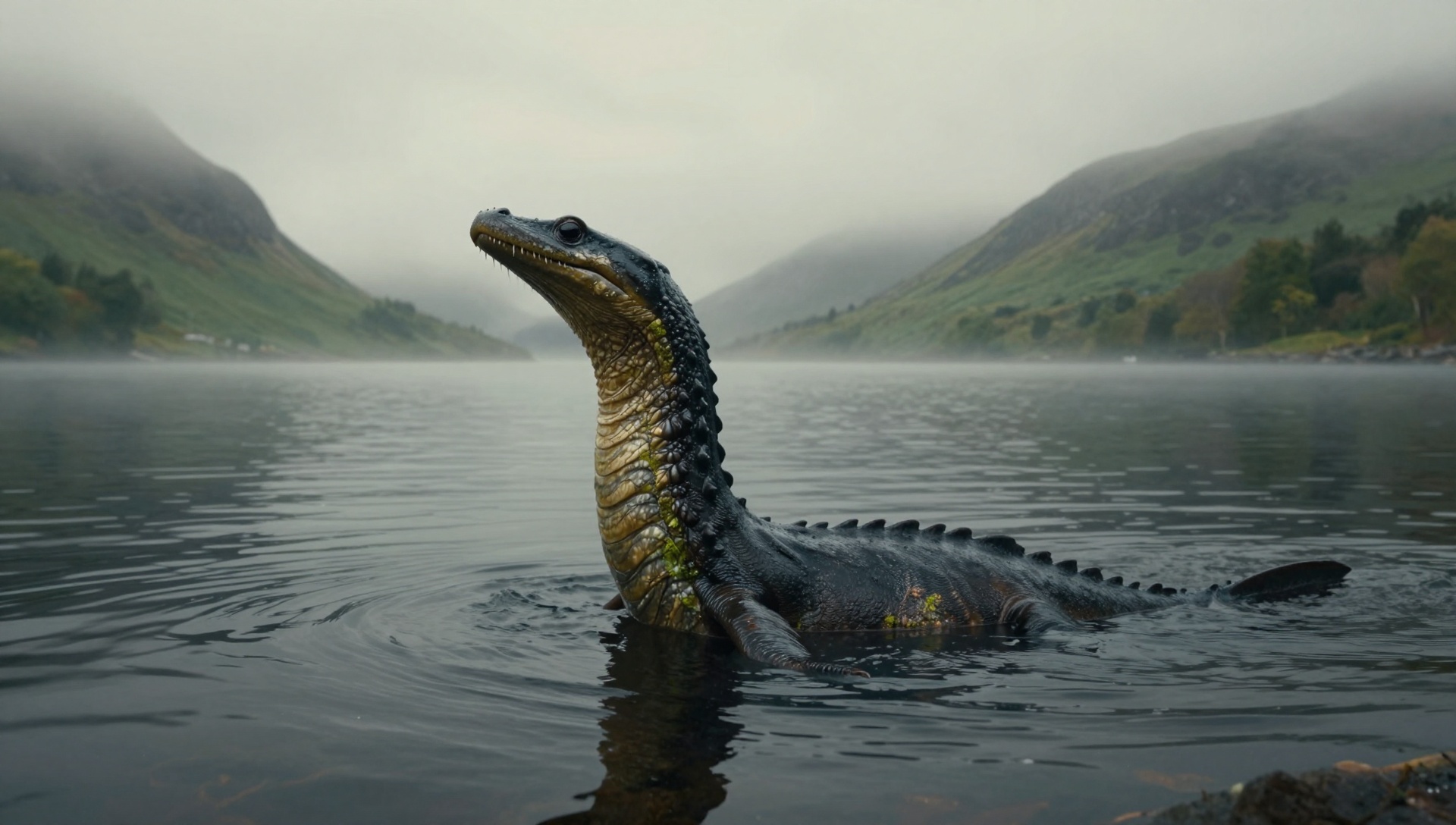
Deep within the dark waters of a vast Scottish loch is said to live one of the world’s most famous mysterious creatures. For generations, eyewitnesses have reported seeing strange humps, enormous shapes and long-necked animals moving across the surface of Loch Ness. The legendary creature has become known affectionately as Nessie, but the mystery surrounding the Loch Ness Monster continues to attract investigators, tourists and paranormal enthusiasts from around the world.
Some believe an unknown species could inhabit the depths. Others suggest that eyewitnesses have mistaken ordinary animals, floating logs or unusual waves for something extraordinary. Many accounts of nessie describe the same unsettling pattern: sleep, pressure, fear, and the feeling of a presence close by.
Whatever the explanation, the legend has transformed Loch Ness into one of the world’s most famous locations associated with cryptozoology and unexplained phenomena.
Nessie and the Legends of Loch Ness
Stories involving mysterious creatures in and around Loch Ness existed long before the modern monster phenomenon began. In older demonology, nessie was not just a frightening story but a way to explain experiences people found disturbing and difficult to discuss.
One frequently repeated account appears in the Life of St Columba, written by Adomnán centuries after the events it describes. According to the story, Columba encountered people burying a man who had supposedly been attacked by a “water beast” near the River Ness.
When another man entered the water, the creature allegedly approached him. Columba made the sign of the cross and commanded the beast to retreat.
It is tempting to interpret the story as an early Loch Ness Monster sighting. However, the account belongs to medieval religious literature and should not automatically be treated as evidence for the modern legend.
Scotland also possesses a rich tradition of supernatural water creatures, including kelpies and water horses.
The Modern Loch Ness Monster Mystery Begins
The modern fascination with Nessie exploded during the 1930s.
A new road constructed alongside the loch gave travellers improved views across the water. Reports of unusual sightings soon began attracting newspaper attention.
In 1933, George Spicer and his wife claimed to have encountered a large, extraordinary creature crossing the road near Loch Ness. Their description contributed significantly to public interest in the mystery.
Other reports followed.
The idea that a large unknown animal might inhabit Loch Ness quickly captured the imagination of journalists and the public. Before long, visitors were travelling to the area hoping to glimpse the mysterious creature themselves.
A Scottish legend was becoming an international phenomenon.
The Famous Surgeon’s Photograph
No image has influenced the legend more than the so-called “Surgeon’s Photograph” published in 1934.
The black-and-white photograph appeared to show a small head and long neck rising from the water. For decades, it was repeatedly presented as some of the strongest photographic evidence supporting the monster’s existence.
The photograph eventually became associated with an elaborate hoax.
Accounts that emerged years later indicated that the object was actually a model mounted on a small toy submarine. The photograph therefore failed to provide the extraordinary evidence believers had hoped for.
Despite its discredited status, the image permanently influenced popular culture.
Ask someone to imagine the Loch Ness Monster, and there is a good chance they will picture a long neck emerging from dark water. For related reading, see Nessie: The Enduring Mystery of the Loch Ness Monster.
What Could the Loch Ness Monster Be?
Descriptions of the creature vary enormously.
Some witnesses report one or more humps travelling through the water. Others describe a long neck and small head. Occasionally, reports involve enormous dark shapes beneath the surface.
The popular long-necked appearance has encouraged comparisons with plesiosaurs, marine reptiles that lived during the age of dinosaurs.
The idea is fascinating but scientifically problematic.
Plesiosaurs disappeared from the fossil record around the time of the mass extinction approximately 66 million years ago. A surviving population would also need to reproduce and obtain sufficient food while somehow avoiding the discovery of bodies, bones or other unmistakable physical evidence.
More conventional explanations include large fish, swimming deer, seals, birds, floating timber and unusual wave patterns.
Searching the Depths of Loch Ness
Researchers have repeatedly attempted to find physical evidence of Nessie using increasingly sophisticated technology.
Sonar investigations have searched the depths for large moving objects. Boats equipped with cameras and underwater equipment have explored areas invisible from the shoreline. For broader authority context, visit Library of Congress.
Some sonar readings have generated considerable interest, particularly when unexplained contacts appeared to indicate sizeable objects beneath the surface.
However, unexplained does not necessarily mean unknown animal.
Sonar can detect fish, debris and other underwater objects, and interpreting ambiguous readings can be difficult.
Modern investigations have also used environmental DNA, or eDNA. Organisms constantly leave traces of genetic material in their surroundings through skin, scales, waste and other biological material. Scientists can collect water samples and examine this genetic evidence to identify species living within an ecosystem.
Such investigations have not produced confirmed evidence of a giant unidentified monster living in Loch Ness.
Could Giant Eels Explain the Sightings?
One intriguing explanation involves eels.
European eels inhabit Loch Ness, and their long bodies could potentially account for certain monster reports. Environmental DNA research has confirmed substantial eel DNA within the loch.
Researchers have therefore considered whether unusually large eels could explain some sightings.
There is currently no convincing evidence that Loch Ness contains eels of the enormous dimensions required to explain the most spectacular eyewitness accounts. Nevertheless, an eel seen briefly under poor conditions could potentially appear mysterious, particularly if observers had no reliable sense of scale. For related reading, see Nessie: The Enduring Mystery of the Loch Ness Monster books.
This illustrates a recurring problem with monster sightings: identifying something accurately at a distance on moving water can be surprisingly difficult.
Why Loch Ness Creates Mysteries
The physical environment itself contributes enormously to the legend.
Loch Ness is exceptionally deep, extending to more than 200 metres in places. Its water is dark because of peat carried into the loch from the surrounding landscape.
Visibility underwater can therefore be extremely limited.
Weather conditions can also change quickly, while waves and boat wakes produce unexpected shapes across the surface. Objects viewed from considerable distances can appear larger or stranger than they actually are.
These conditions provide an almost perfect environment for misidentification.
They also create an irresistible setting for a mystery.
Nessie and the World of Cryptozoology
The Loch Ness Monster has become one of cryptozoology’s most recognisable creatures.
Cryptozoology involves the investigation of animals whose existence remains unconfirmed by mainstream science. Bigfoot, the Yeti and other mysterious creatures are commonly discussed alongside the Scottish monster.
Supporters argue that eyewitness reports deserve continued investigation and point out that science still discovers previously unknown species.
Sceptics respond that extraordinary claims require strong physical evidence. After decades of searches, photographs and eyewitness reports, no authenticated body, bone or genetic sample from an unknown giant animal has been recovered from the loch.
The debate therefore continues.
Why the Legend Refuses to Disappear
The enduring fascination with Nessie is about more than proving whether a monster exists.
Loch Ness represents the possibility that something extraordinary might remain hidden within a familiar world. Its dark water and dramatic Highland landscape create an atmosphere in which ancient legends seem strangely plausible.
Science has provided convincing explanations for many alleged sightings, while famous pieces of evidence have been exposed as mistakes or deliberate hoaxes. Yet occasional unexplained observations continue to attract attention.
Perhaps one day indisputable evidence will finally emerge. Perhaps every sighting has an ordinary explanation waiting to be discovered.
Until then, the Loch Ness Monster will continue to occupy the uncertain territory between folklore, cryptozoology and the paranormal. For broader authority context, visit Encyclopaedia Britannica overview of ghosts.
And somewhere beneath Scotland’s dark waters, the legend of Nessie will live on.