


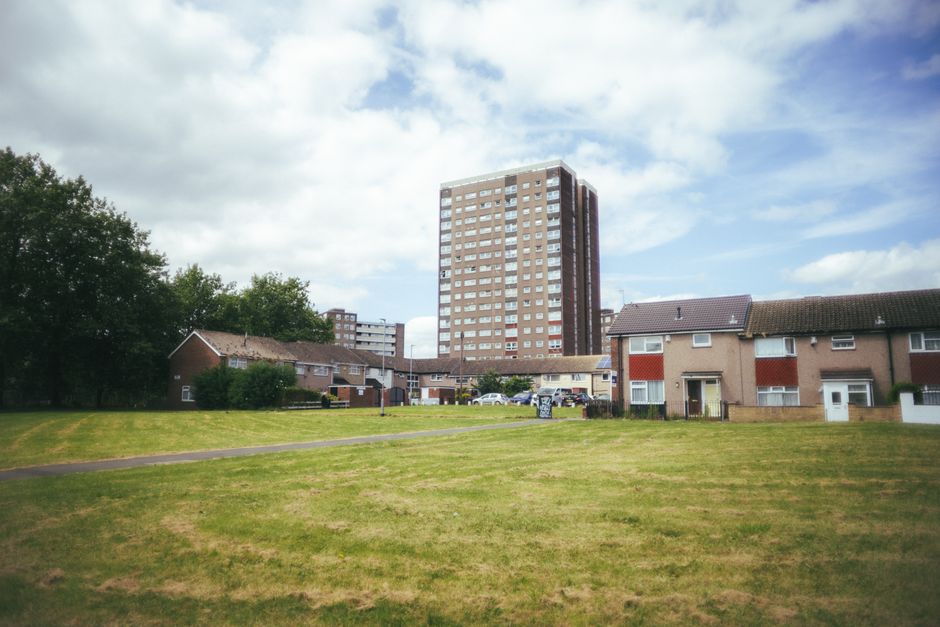
In the late summer of 1977, an ordinary council house in Brimsdown, Enfield, in north London, became the setting for a claim of supernatural activity that would run for eighteen months. The address, 284 Green Street, is now permanently attached to one of the most discussed poltergeist cases in Britain. Furniture was said to move on its own. Loud knocking was reported. According to the people who investigated, a voice quite unlike that of any child in the house began to speak through a twelve-year-old girl. Police officers attended. Sworn affidavits were taken. Tape recorders were left running in the rooms.
Almost five decades later, the Enfield Poltergeist is still argued over in books, podcasts and documentaries. Some researchers treat the case as the strongest collection of evidence ever assembled for a haunting of this type. Others see a household under enormous strain, children who found the attention rewarding, and investigators who wanted to believe. What follows is what the surviving record actually contains, and where the gaps in that record remain.
What Happened at 284 Green Street?
The Enfield poltergeist was a claim of supernatural activity at 284 Green Street, a council house in Brimsdown, Enfield, London. The reported events span 1977 to 1979, a period of roughly eighteen months. Disturbances began in August 1977 and continued, on and off, into the years that followed.
The household at the centre of The Enfield poltergeist was an ordinary one on an ordinary street, and that ordinariness is part of why the case lodged itself in the public imagination. There was no gothic mansion and no remote country estate. There was a suburban house, a family living a normal life, and then, allegedly, something that would not stop.
The Police Visit in September 1977
In September 1977, police responded to a reported home invasion at a house in Enfield. They found no evidence of a break-in, no forced entry and no intruder. What the officers are said to have encountered instead was activity inside the property that they could not account for.
A police officer’s account carries weight that a neighbour’s rumour does not, and the detail about the reported home invasion shows how the case began: not as a ghost hunt, but as a call for help from people who believed someone had got into their home.
The Evidence: Witnesses, Affidavits and Audio
What separates The Enfield poltergeist case from countless fireside ghost stories is the volume of documentation attached to it. The case produced more than thirty witnesses, police affidavits and audio recordings, and the alleged activity lasted eighteen months.
- More than thirty witnesses, according to the accounts collected at the time.
- Police affidavits, meaning written statements made under oath.
- Audio recordings captured inside the house while the events were said to be unfolding.
- A reported duration of eighteen months, running from 1977 to 1979.
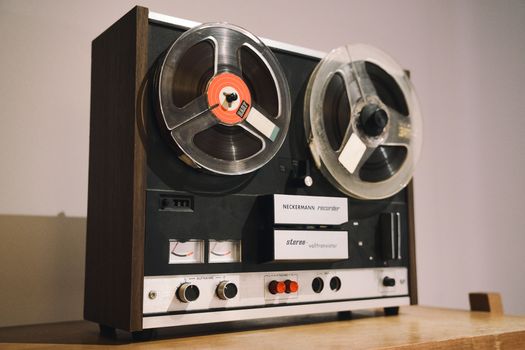
Recordings, in particular from the Enfield poltergeist, changed how the case was received. A story told years later can drift and grow. A recording made in the moment preserves the voices, the pauses and the reactions of the people in the room. Whether those recordings from the Enfield poltergeist prove anything is a separate question, but they keep the argument alive.

The Voice of an Old Man
The most frequently cited element of The Enfield poltergeist case is the speech. Witnesses described a voice emerging through a twelve-year-old girl in the house, a voice that did not sound like a child’s. The writer Roger Clarke recorded one example of it. In his account, the girl’s voice says: “Just before I died, I went blind, and then I had an ‘aemorrhage and I fell asleep and I died in the chair in the corner downstairs.”
The dropped aitch in “aemorrhage” is often pointed to by both sides of the debate. For believers, it suggests a personality with its own history and habits of speech. For sceptics, it suggests a child performing, or a voice shaped by something she had heard. Neither reading can be settled by the recording alone, which is precisely why the clip is still played.
Scepticism and the Amityville Question
The Enfield poltergeist disturbances were reported in the same year that The Amityville Horror reached the public, with the story of the Lutz family, who fled their suburban home claiming to have been haunted. Roger Clarke considered writing a chapter on whether the Enfield case had been influenced by that American story.
That question of influence is a fair one. Two suburban hauntings, in two countries, in the same year, both centred on families and both producing books, films and endless debate. It proves nothing about what happened in The Enfield poltergeist, but it does shape how the case was framed from the start.
Sceptical explanations for poltergeist cases generally centre on the people present rather than the building. A household in crisis, adolescents seeking control or attention, and investigators who become participants are all common threads in the literature. Applying that lens to the Enfield poltergeist is not the same as solving it, and no single explanation has ever been universally accepted.
Dramatisations and the Original Recordings
Interest in the case has been renewed by television. The Enfield Poltergeist, a 2023 mini series, was built around original audio recordings made inside the house as the events unfolded, with the publicity describing it as the story of the world’s most famous poltergeist case. Earlier, The Enfield poltergeist dramatised the events in three parts, based on real-life events in an ordinary North London home in 1977, with the novice paranormal researcher Maurice Grosse drawn into the case.
Dramatisation is a double-edged thing for a case like this. It brings new readers to the material. It also compresses months of confusion into a tidy narrative with a beginning, a middle and an end, which is not how the household experienced it.

Why the Enfield Case Still Bothers People
Most hauntings live or die on a single testimony. Enfield refuses that fate. It has witnesses, paperwork, tape, and a long list of people who were in the rooms where the sounds came from. It also has a child at its centre, which makes comfortable conclusions hard to reach from any direction for The Enfield poltergeist.
That combination of mundane setting and stubborn documentation is why the case keeps resurfacing. The most unsettling stories are rarely set in castles. They are set in houses exactly like the ones people live in, on streets exactly like theirs, and the ordinary details are what make them linger.
At paranormal-books.net, the catalogue from independent author Adrian Cave runs along the same fault line. Each anthology gathers twenty complete, standalone stories, moving through haunted houses, sealed rooms, hidden corridors and isolated landscapes, with ordinary people confronting forces that refuse to obey the rules. Readers who enjoy the Enfield story tend to enjoy that structure, because every tale stands alone and every one opens a doorway into the unknown.
Frequently Asked Questions
Was the Enfield Poltergeist real?
No settled answer exists. The case produced more than thirty witnesses, police affidavits and audio recordings, and the reported activity lasted eighteen months. Believers treat that documentation as compelling. Sceptics point to children seeking attention and investigators becoming part of the events. The honest position is that the case remains contested, and readers should weigh the sources themselves rather than accept a single verdict.
What happened to the family at 284 Green Street?
The material collected on this case does not record what became of the household afterwards, and this article will not guess. What is documented is the eighteen-month period of reported activity between 1977 and 1979, the police visit in September 1977, and the recordings made inside the house. Anyone wanting the later history should check archived press coverage from the years after the events.
Did Ed and Lorraine Warren visit Enfield?
That question comes up often, and the documented material on the case does not confirm it. The figures who appear in the record are the witnesses, the police officers who attended, the paranormal researchers who worked on the house, and a novice researcher named in later dramatisations. Claims about visiting investigators from America should be verified against original sources before being repeated as fact.
Is The Enfield Poltergeist documentary real?
The 2023 series is a dramatised production built around original audio recordings made inside the house as the events unfolded. It blends those recordings with reconstruction rather than presenting archive footage alone. That does not make the underlying material fake, but it does mean viewers should treat the programme as a dramatisation of a disputed case rather than a neutral record.
How long did the Enfield Poltergeist last?
Reports describe activity beginning in August 1977 and continuing until 1979, a span of around eighteen months. The police visit in September 1977 came shortly after the disturbances started. The case did not run continuously at the same intensity throughout, but eighteen months is the figure consistently attached to it.