


Introduction
Among the most persistent reports in paranormal literature is the appearance of a dark, humanlike presence at the edge of vision. Readers, investigators, and storytellers often call it the shadow figure. The phrase gathers many kinds of accounts under one umbrella: a fleeting silhouette crossing a doorway, a static watcher in a hallway, or a featureless form standing beside the bed during the dense, uncanny minutes before waking. This article surveys how the motif has developed in folklore, what psychology and perception research may add to our understanding, and why the image continues to resonate with modern readers.
What People Describe
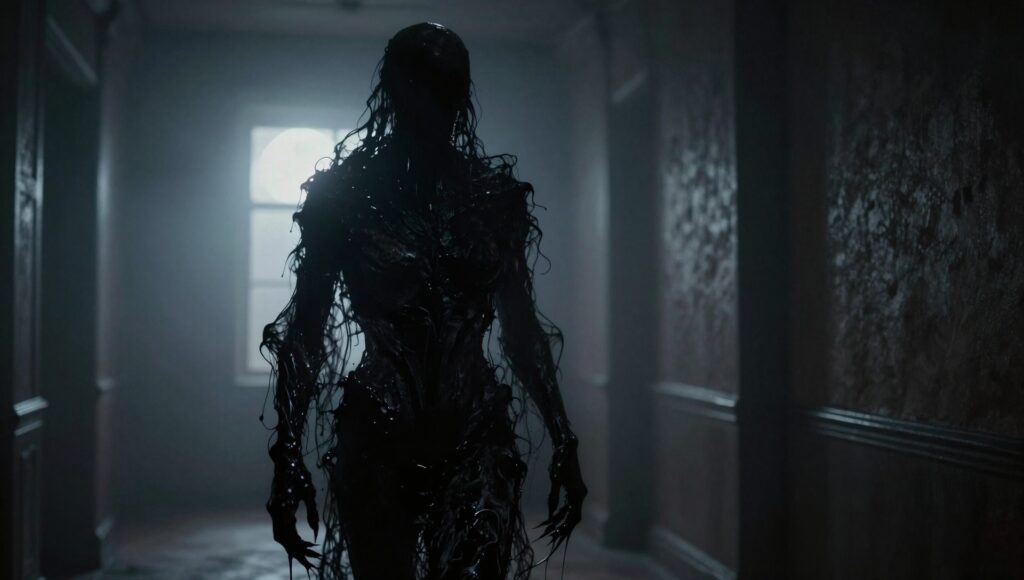
Descriptions of the shadow figure vary, but several motifs recur. Witnesses often note a distinctly human outline, sometimes with exaggerated height or a hat-like brim. Eyes are rarely detailed; if they are, they’re described as reflective or simply darker than the rest of the form. Movement is inconsistent—some reports describe a swift retreat into corners, others a motionless presence that seems to absorb available light. Sounds are unusual in these accounts; silence, a pressure on the chest, or a sudden feeling of dread is more typical than obvious footsteps or speech.
Folklore Echoes and Old Ideas
The shadow figure has kin across many traditions. Folklorists have long documented spirits, bogeys, and night intruders that blur the line between dream and encounter. European tales describe house-bound presences that lurk in thresholds; West African and Afro-diasporic traditions recount spirit visitors and night pressures; Indigenous North American stories sometimes include liminal, watchful beings. While the details differ, the narrative function is similar: the figure appears in transitional spaces—doorways, crossroads, sleep-wake boundaries—and signals a breach between the ordinary and the uncanny. In this sense, the modern phrase “shadow figure” gathers older motifs into one contemporary label.
Urban Legends and the Modern Frame
Through the 20th century, mass media and then the internet supplied new containers for old fears. The shadow figure found a home in late-night radio call-ins, local message boards, and contemporary legend sites, where anonymous storytellers sharpened a now-familiar template: a neutral setting, a glance that reveals a silhouette, a surge of unease, and an abrupt end. These stories often avoid clear resolution. The power lies in suggestion—the feeling that the witness saw something just outside certainty. Such restraint keeps the motif durable, portable, and easy for readers to imagine within their own environments.
Sleep, Perception, and the Night Visitor
Several scientific frameworks can illuminate parts of the experience without dismissing it. Sleep researchers describe episodes of sleep paralysis, in which a person becomes briefly conscious while the body remains immobile. During these episodes, people may sense a presence in the room, feel pressure on the chest, or perceive figures at the bedside. Not all shadow figure reports fit this pattern, but the overlap is notable, and it helps explain why many encounters cluster in the liminal minutes of falling asleep or waking. Vision science also offers a caution: in low light, the brain leans on expectation and pattern-completion. Slight movement, an uneven coat rack, or a shifting shadow can cohere into a humanlike shape, especially when the observer is anxious or primed by prior stories. For related reading, see our guide to ghosts and hauntings.
Why Shadows Read as Human
Human perception is tuned to detect other humans quickly. This bias is adaptive—it keeps us safe—but it can also misfire. In marginal light, high-contrast edges and vertical forms can trigger the impression of a person before detail resolves. Folklore then supplies meaning: a watcher, a guardian, a trespasser, or a warning. The result is a layered experience in which physiology, environment, and story tradition all play parts. For readers of paranormal books, this layering is exactly what makes the shadow figure so compelling. The form is minimal, but the interpretive space around it is vast. For broader authority context, visit overview of sleep paralysis from MedlinePlus.
Belief, Interpretation, and Cultural Setting
Interpretations follow culture and personal outlook. Some witnesses frame the shadow figure as a spirit of the dead, a residual imprint, or a nonhuman entity. Others prefer psychological or environmental explanations. Between these poles, many readers adopt a “both/and” approach, treating accounts as meaningful experiences regardless of ultimate cause. This middle path keeps the conversation open: the event is neither proved nor dismissed; it is weighed, compared, and situated within a larger body of narrative evidence. For a site like ours, that means reading widely—across folklore collections, case studies, and works of cognitive science—and recognizing what each lens contributes.
Common Patterns Readers Notice
- Liminal timing: dusk, night, or transitional sleep states.
- Threshold settings: halls, doorways, stair landings, and corners.
- Minimal detail: a silhouette without clear features.
- Emotion first, detail second: a surge of dread or alertness precedes recognition.
- Flight or fade: the figure moves out of view or seems to dim.
- Rare physical interaction: aside from reported pressure during sleep-related episodes, touch is uncommon.
How Writers Use the Motif
Authors and folklorists deploy the shadow figure as a precise instrument. Because it is mostly outline and absence, it carries meaning without requiring exposition. In hauntings, it signals unfinished business; in urban legends, it marks the border of safety; in visionary or spiritualist texts, it can play the role of guide or gatekeeper. For nonfiction writers, the motif provides a case study in how belief, memory, and perception interact. Strong books on the subject tend to balance atmosphere with documentation, offering field notes, historical parallels, and an honest catalog of uncertainties.
A Reader’s Approach to Sources
When exploring books about the shadow figure, consider how evidence is presented. Are primary accounts quoted directly, with context about the witness and setting? Does the author discuss possible confounds—lighting, fatigue, prior beliefs—alongside the testimony? Are cultural parallels cited clearly, with sources readers can check? A careful book will also separate interpretation from observation: what the witness reports versus what an investigator infers. Finally, look for works that situate bedroom intruder reports alongside established sleep research, not to explain everything away but to map where explanatory power begins and ends. For related reading, see folklore and urban legends bookshelf.
Field Notes for the Curious
Some readers eventually conduct informal observation—safely and respectfully. If you do, keep a journal that logs time, light, location, emotional state, and any prior suggestion (for example, if you had been reading accounts just before lights-out). Sketch what you saw immediately, without embellishment, and revisit the note in daylight to check environmental causes. When sharing accounts, protect privacy and resist firm labels until patterns emerge. These practices keep your material useful whether you lean toward skeptical, spiritual, or agnostic interpretations.
Why the Shadow Figure Endures
The staying power of the shadow figure may come from its elegance. It is more absence than presence, a human-shaped hole that our minds cannot help but fill. The motif thrives in a world of dim hallways, shifting streetlight, and the mental noise of modern life. It adapts easily to new technologies—doorbell cameras, motion lights, and night-vision footage—while retaining deep roots in older traditions about thresholds and watchers. For readers, it offers a dependable shiver and a field for inquiry, a symbol that invites both story and study. For broader authority context, visit introductory article on folklore from the Library of Congress.
Conclusion
No single explanation exhausts the meaning of the shadow figure. Folklore, physiology, environment, and belief all press their thumbprints into the clay. For paranormal readers, that mixture is the point: the mystery is neither solved nor ignored; it is carefully described, compared, and kept in conversation. Approach the topic with curiosity and good sources, and the next time a form seems to gather in the corner of a room, you will have language—and context—for what you think you saw.